
725765

2-甲基-4-异噻唑啉-3-酮
95%
别名:
2-甲基-3(2H)-异噻唑啉酮
登录 查看组织和合同定价。
选择尺寸
变更视图
关于此项目
经验公式(希尔记法):
C4H5NOS
化学文摘社编号:
分子量:
115.15
UNSPSC Code:
12352100
NACRES:
NA.21
PubChem Substance ID:
EC Number:
220-239-6
Beilstein/REAXYS Number:
606203
MDL number:
Assay:
≥94.0% (GC), 95%
Form:
lumps
Quality Level
assay
≥94.0% (GC), 95%
form
lumps
impurities
≤5% water
SMILES string
CN1SC=CC1=O
InChI
1S/C4H5NOS/c1-5-4(6)2-3-7-5/h2-3H,1H3
InChI key
BEGLCMHJXHIJLR-UHFFFAOYSA-N
Application
- Insights into the mechanisms of within-species variation in sensitivity to chemicals: A case study using daphnids exposed to CMIT/MIT biocide.:研究水蚤对2-甲基-4-异噻唑啉-3-酮的不同种内敏感度,说明这些差异后潜藏的生化机制。该发现为环境安全性评估带来重要视点(Kim et al., 2023)。
- Effects of the biocide methylisothiazolinone on Xenopus laevis wound healing and tail regeneration.:该研究评估2-甲基-4-异噻唑啉-3-酮对两栖动物再生过程的影响,有助了解它的生物作用和潜在毒性(Delos Santos et al., 2016)。
- T cell lymphomatoid contact dermatitis: a challenging case and review of the literature.:该综述有讨论2-甲基-4-异噻唑啉-3-酮诱发的接触性皮炎,提供有关皮肤科应用和安全评估的宝贵信息(Knackstedt and Zug, 2015)。
Disclaimer
The product is not intended for use as a biocide under global biocide regulations, including but not limited to US EPA′s Federal Insecticide Fungicide and Rodenticide Act, European Biocidal Products Regulation, Canada’s Pest Management Regulatory Agency, Turkey’s Biocidal Products Regulation, Korea’s Consumer Chemical Products and Biocide Safety Management Act (K-BPR) and others.
Still not finding the right product?
Explore all of our products under 2-甲基-4-异噻唑啉-3-酮
signalword
Danger
Hazard Classifications
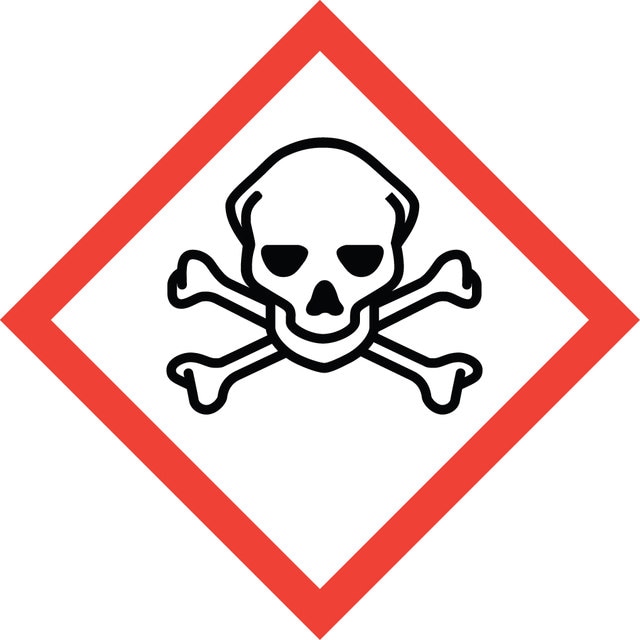
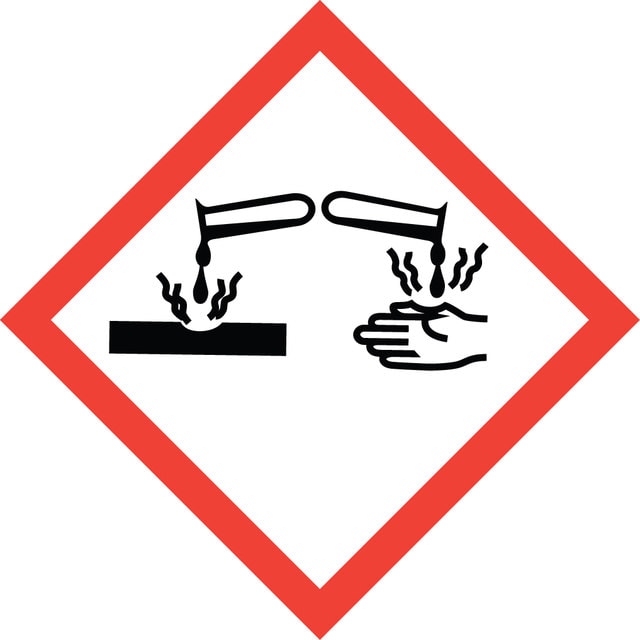
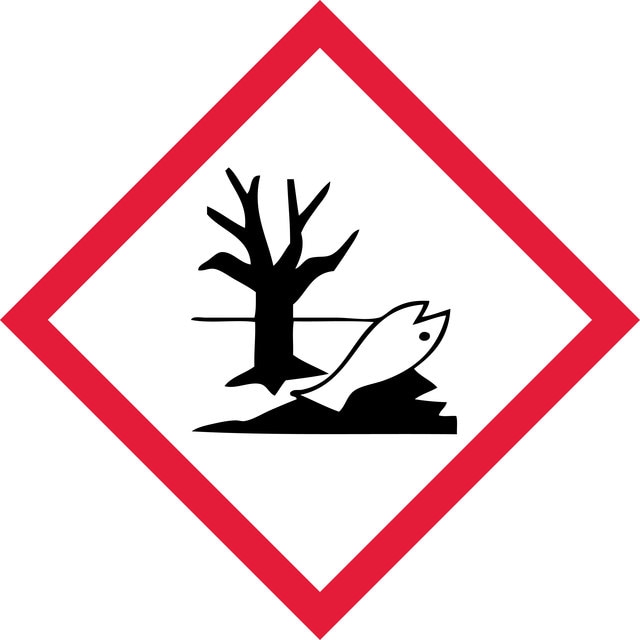
Acute Tox. 2 Inhalation - Acute Tox. 3 Dermal - Acute Tox. 3 Oral - Aquatic Acute 1 - Aquatic Chronic 1 - Eye Dam. 1 - Skin Corr. 1B - Skin Sens. 1A
supp_hazards
存储类别
6.1A - Combustible acute toxic Cat. 1 and 2 / very toxic hazardous materials
wgk
WGK 3
flash_point_f
Not applicable
flash_point_c
Not applicable
ppe
dust mask type N95 (US), Eyeshields, Faceshields, Gloves, type P3 (EN 143) respirator cartridges
Christina L Burnett et al.
International journal of toxicology, 29(4 Suppl), 187S-213S (2010-07-22)
Methylisothiazolinone (MIT) is a heterocyclic organic compound used as a preservative in cosmetics and personal care products in concentrations up to 0.01%. MIT is a colorless, clear liquid with a mild odor that is completely soluble in water; mostly soluble
Eleanor Higgins et al.
Dermatitis : contact, atopic, occupational, drug, 24(2), 73-76 (2013-03-12)
The isothiazolinones methylchloroisothiazolinone and methylisothiazolinone (MCI/MI) are the active ingredients in a frequently used preservative in cosmetic, household, and industrial products. This study reviewed our department's cases of allergic contact dermatitis caused by MCI/MI, outlining their clinical presentation and possible
A Spawn et al.
Neuroscience, 205, 194-204 (2012-01-17)
Methylisothiazolinone (MIT) is a commonly used biocide known to be neurotoxic in vitro. Brief exposure of cortical neurons in culture to MIT results in increased neurodegeneration, whereas chronic exposure of developing neurons in culture to low concentrations of MIT has
全球贸易项目编号
| 货号 | GTIN |
|---|---|
| 725765-25G | 04061832861906 |
| 725765-5G | 04061832861920 |