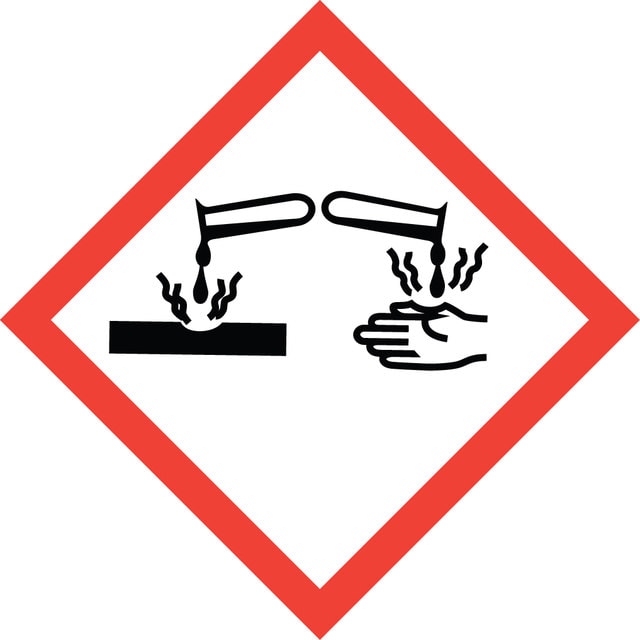
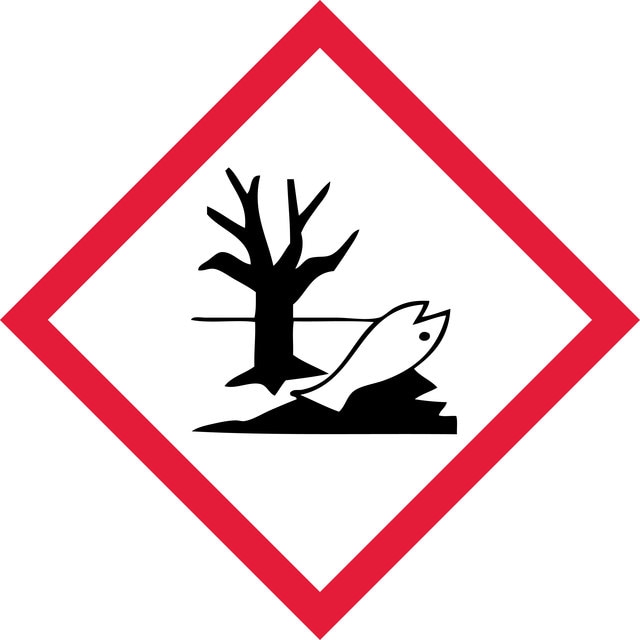
Skip to Content
Merck
CN

138630

1-Chloro-2,4-dinitrobenzene

97%

Synonym(s):

2,4-Dinitrochlorobenzene, CDNB, DNCB

Sign In to View Organizational & Contract Pricing.

Select a Size

Change View

About This Item

Linear Formula:
ClC6H3(NO2)2
CAS Number:
Molecular Weight:
202.55
UNSPSC Code:
12352100
NACRES:
NA.22
PubChem Substance ID:
EC Number:
202-551-4
Beilstein/REAXYS Number:
613161
MDL number:
Assay:
97%
Form:
solid
Technical Service
Need help? Our team of experienced scientists is here for you.
Let Us Assist


Quality Level

assay

97%

form

solid

expl. lim.

22 %

bp

315 °C (lit.)

mp

48-50 °C (lit.)

solubility

alcohol: soluble (hot), alcohol: very slightly soluble (cold), benzene: soluble, carbon disulfide: soluble, diethyl ether: soluble, water: insoluble

functional group

chloro, nitro

SMILES string

[O-][N+](=O)c1ccc(Cl)c(c1)[N+]([O-])=O

InChI

1S/C6H3ClN2O4/c7-5-2-1-4(8(10)11)3-6(5)9(12)13/h1-3H

InChI key

VYZAHLCBVHPDDF-UHFFFAOYSA-N

Application

1-Chloro-2,4-dinitrobenzene was used in determination of relative amounts of individual glutathione S-transferases subunits in human tissues by reverse-phase HPLC. It was used as contact sensitizer to study the antibacterial peptides hBD-2, -3 and -4 and LL-37 induced IL-18 protein release in human keratinocytes.

Biochem/physiol Actions

2,4-dinitrochlorobenzene induces atopic dermatitis in BALB/c mice model.

Preparation Note

The product is dissolved in ethanol when used as glutathione S-transferase substrate and then added to a buffer to form a final concentration of 1mM in phosphate buffer (8 mL of 0.2 M KH2PO4 and 28 mL of 0.1 M Na2HPO4 per 100 mL of solution, adjusted to pH 6.5) and 4% (v/v) ethanol.


Still not finding the right product?

Explore all of our products under 1-Chloro-2,4-dinitrobenzene
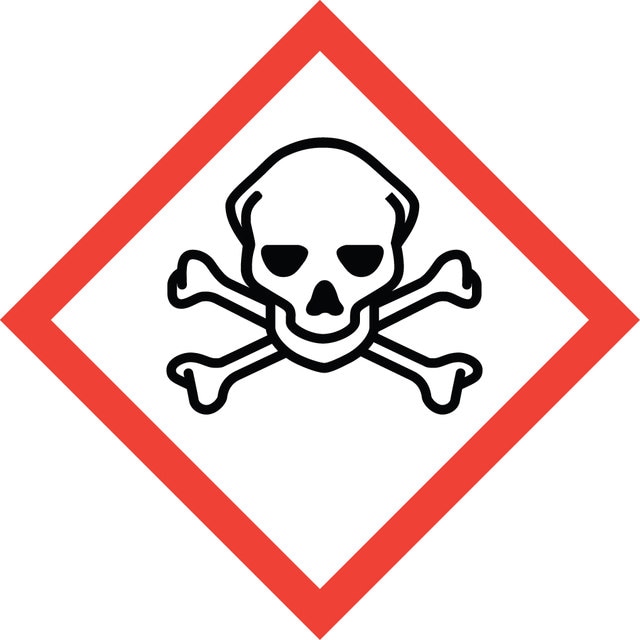

signalword

Danger

Hazard Classifications

Acute Tox. 2 Dermal - Acute Tox. 4 Oral - Aquatic Acute 1 - Aquatic Chronic 1 - Eye Dam. 1 - Skin Irrit. 2 - Skin Sens. 1

Storage Class

6.1A - Combustible acute toxic Cat. 1 and 2 / very toxic hazardous materials

wgk

WGK 2

flash_point_f

381.2 °F - closed cup

flash_point_c

194 °C - closed cup

ppe

Eyeshields, Faceshields, Gloves, type P2 (EN 143) respirator cartridges

Regulatory Information

危险化学品

This item has


Choose from one of the most recent versions:

Certificates of Analysis (COA)

Lot/Batch Number

Don't see the Right Version?

If you require a particular version, you can look up a specific certificate by the Lot or Batch number.

Already Own This Product?

Find documentation for the products that you have recently purchased in the Document Library.

Visit the Document Library


Mingli Sun et al.
Molecular medicine reports, 9(2), 689-694 (2013-12-18)
Bacillus Calmette-Guerin extract (BCGE) has been proven to be clinically effective for anaphylactic disease, infectious diseases and cancer. In this study, we investigated the effect of the intramuscular application of BCGE on 2,4-dinitrochlorobenzene (DNCB)-induced atopic dermatitis (AD). We established an
J D Rowe et al.
The Biochemical journal, 325 ( Pt 2), 481-486 (1997-07-15)
Uncertainties about the composition and identities of glutathione S-transferases (GSTs) in human tissue have impeded studies on their biological functions. A rigorous protocol has therefore been developed to characterize the human proteins. Cytosolic GST subunits were resolved by reverse-phase HPLC
Antony Anet et al.
Journal of hazardous materials, 370, 42-53 (2018-09-15)
This study investigates Bisphenol A (BPA) induced oxidative stress that mediates the genotoxicity in in vivo model Drosophila melanogaster. The calculated LC50 for BPA was 12.35 μg/mL. The strains of D. melanogaster were reared in 0.1, 1.0, 2.5 and 5.0 μg/mL BPA


Global Trade Item Number

SKUGTIN
138630-100G04061838732415
138630-500G04061838732422
138630-5G04061835149803