
150584

1-Decanol
98%
Synonym(s):
n-Decyl alcohol, Alcohol C10
Sign In to View Organizational & Contract Pricing.
Select a Size
Change View
About This Item
Linear Formula:
CH3(CH2)9OH
CAS Number:
Molecular Weight:
158.28
UNSPSC Code:
12352100
NACRES:
NA.22
PubChem Substance ID:
EC Number:
203-956-9
Beilstein/REAXYS Number:
1735221
MDL number:
Assay:
98%
Form:
liquid
vapor density
4.5 (vs air)
Quality Level
vapor pressure
1 mmHg ( 70 °C), 8.25 mmHg ( 100 °C)
assay
98%
form
liquid
autoignition temp.
550 °F
refractive index
n20/D 1.437 (lit.)
bp
231 °C (lit.)
mp
5-7 °C (lit.)
solubility
H2O: slightly soluble 0.0211 g/L at 20 °C
density
0.829 g/mL at 25 °C (lit.)
functional group
hydroxyl
SMILES string
CCCCCCCCCCO
InChI
1S/C10H22O/c1-2-3-4-5-6-7-8-9-10-11/h11H,2-10H2,1H3
InChI key
MWKFXSUHUHTGQN-UHFFFAOYSA-N
Application
1-Decanol was used to study the thermal properties of polymer-monolithic stationary phases.
Still not finding the right product?
Explore all of our products under 1-Decanol
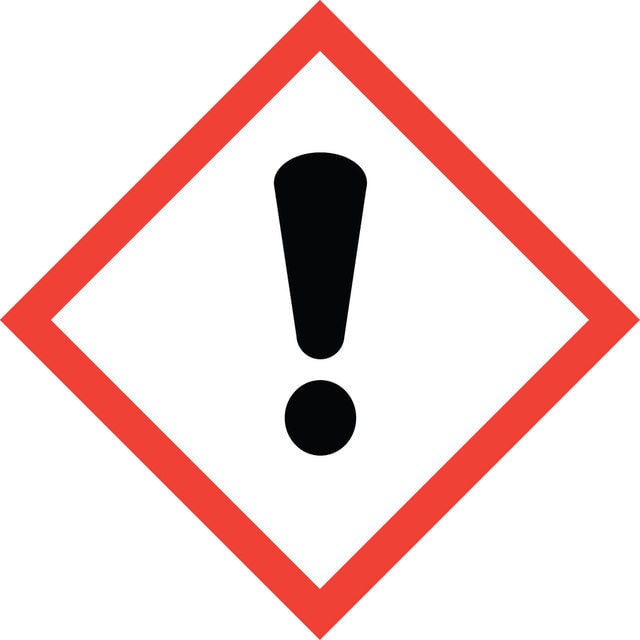
signalword
Warning
hcodes
Hazard Classifications
Aquatic Chronic 3 - Eye Irrit. 2
Storage Class
10 - Combustible liquids
wgk
WGK 1
flash_point_f
203.0 °F - Pensky-Martens closed cup
flash_point_c
95 °C - Pensky-Martens closed cup
ppe
Eyeshields, Faceshields, Gloves, type ABEK (EN14387) respirator filter
Choose from one of the most recent versions:
Already Own This Product?
Find documentation for the products that you have recently purchased in the Document Library.
Sam Wouters et al.
Journal of separation science, 37(1-2), 179-186 (2013-10-30)
Thermal analysis and SEM were employed to gain insights in the different stages of morphology development and the thermal properties of polymer-monolithic stationary phases. The studied system was a thermally initiated free-radical copolymerization reaction at 70°C of styrene and divinylbenzene
Grit Neumann et al.
Applied and environmental microbiology, 72(6), 4232-4238 (2006-06-06)
The solvent-tolerant strain Pseudomonas putida DOT-T1E was grown in batch fermentations in a 5-liter bioreactor in the presence and absence of 10% (vol/vol) of the organic solvent 1-decanol. The growth behavior and cellular energetics, such as the cellular ATP content
Maria Paola Tampieri et al.
Mycopathologia, 159(3), 339-345 (2005-05-11)
Many volatile oils are known to possess antifungal properties and are potentially applicable as antimycotic agents. By studying the efficacy of essential oils against different pathogenic mycetes, we have evaluated the in-vitro inhibiting activity of some essential oils and their
Global Trade Item Number
| SKU | GTIN |
|---|---|
| 150584-3KG | 04061838738905 |
| 150584-500G | 04061838738912 |