
254185

Copper(I) bromide
99.999% trace metals basis
Synonym(s):
Cuprous bromide
Select a Size
About This Item
assay
99.999% trace metals basis
form
powder
reaction suitability
core: copper, reagent type: catalyst
impurities
≤15.0 ppm Trace Metal Analysis
mp
504 °C (lit.)
density
4.71 g/mL at 25 °C (lit.)
SMILES string
[Cu]Br
InChI
1S/BrH.Cu/h1H;/q;+1/p-1
InChI key
NKNDPYCGAZPOFS-UHFFFAOYSA-M
General description
Application
- As a solution-processable hole transport layer (HTL) for organic solar cells (OSCs). CuBr enhances the power conversion efficiency of solar cells.
- As a precursor to synthesize photoluminescent metal organic frameworks(MOFs).
- To synthesize highly emissive three-coordinate copper(I) complexes as a dopant in OLEDs with maximum external quantum efficiency of 21.3%.
- As a catalyst with ligands for atom transfer radical polymerization (ATRP) reaction of tertiary alkyl halides in 14 different solvents to determine the rate constant.
- To synthesize macrocyclic polymer via intramolecular radical trap-assisted atom transfer radical coupling.
Still not finding the right product?
Explore all of our products under Copper(I) bromide


signalword
Danger
Hazard Classifications
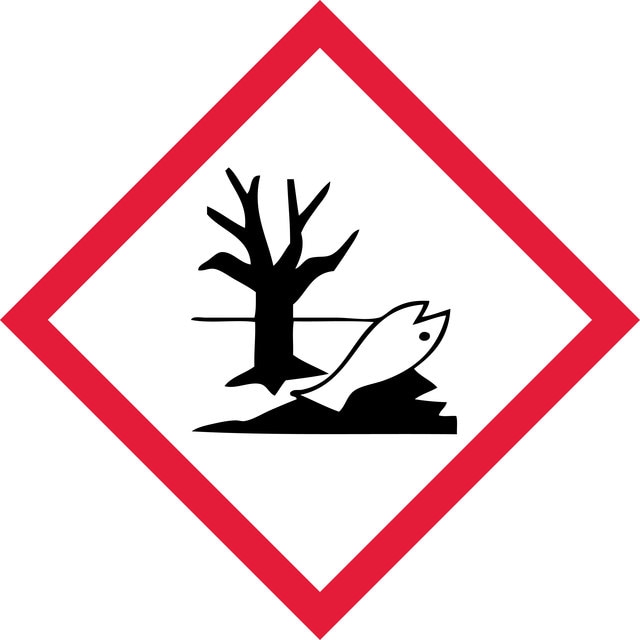
Acute Tox. 4 Dermal - Acute Tox. 4 Oral - Aquatic Acute 1 - Aquatic Chronic 1 - Eye Dam. 1 - Skin Irrit. 2
Storage Class
11 - Combustible Solids
wgk
WGK 3
flash_point_f
Not applicable
flash_point_c
Not applicable
ppe
Eyeshields, Gloves, type N95 (US)
Choose from one of the most recent versions:
Already Own This Product?
Find documentation for the products that you have recently purchased in the Document Library.
Protocols
We present an article about RAFT, or Reversible Addition/Fragmentation Chain Transfer, which is a form of living radical polymerization.
Polymerization via ATRP procedures demonstrated by Prof. Dave Haddleton's research group at the University of Warwick.
We presents an article featuring procedures that describe polymerization of methyl methacrylate and vinyl acetate homopolymers and a block copolymer as performed by researchers at CSIRO.
Articles
Micro review of reversible addition/fragmentation chain transfer (RAFT) polymerization.
Global Trade Item Number
| SKU | GTIN |
|---|---|
| 254185-100G | 04061833595862 |
| 254185-10G | 04061825983790 |