
428566

2,6-Dimethoxy-1,4-benzoquinone
97%
Synonym(s):
DMBQ
Sign In to View Organizational & Contract Pricing.
Select a Size
Change View
About This Item
Empirical Formula (Hill Notation):
C8H8O4
CAS Number:
Molecular Weight:
168.15
NACRES:
NA.22
PubChem Substance ID:
UNSPSC Code:
12352100
EC Number:
208-484-7
MDL number:
Assay:
97%
Quality Level
assay
97%
mp
253-257 °C (dec.) (lit.)
solubility
DMSO: soluble(lit.)
functional group
ether, ketone
SMILES string
COC1=CC(=O)C=C(OC)C1=O
InChI
1S/C8H8O4/c1-11-6-3-5(9)4-7(12-2)8(6)10/h3-4H,1-2H3
InChI key
OLBNOBQOQZRLMP-UHFFFAOYSA-N
General description
2,6-Dimethoxy-1,4-benzoquinone (DBQ, 2,6-DMBQ, DMOBQ) is a 1,4-benzoquinone derivative. It is a wood allergen, has been reported to cause various skin and mucosal symptoms on exposure to wood dusts. It is formed as a product due to the activity of bacterial Azospirillum lipoferum laccase on phenolic compounds of the syringic type. DBQ is one of the components isolated from the rhizome of Gynura japonica with a potential to show anti-platelet aggregation activity in vitro. It is an anticancer agent, whose kinetics of cyclic redox transformation induced by ascorbate (AscH-) has been studied using the Clark electrode and ESR techniques. Its electrochemical reduction in acetonitrile has been studied.
Application
2,6-Dimethoxy-1,4-benzoquinone may be used in the synthesis of 2-aryl-3,5-dimethoxy-1,4-benzoquinone derivatives.
Known haustorial inducing factor.
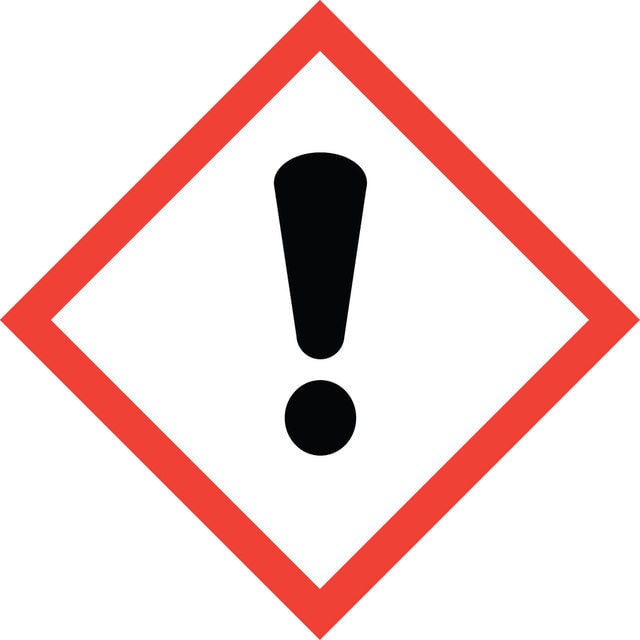
signalword
Warning
hcodes
Hazard Classifications
Eye Irrit. 2 - Skin Irrit. 2 - STOT SE 3
target_organs
Respiratory system
Storage Class
11 - Combustible Solids
wgk
WGK 3
flash_point_f
Not applicable
flash_point_c
Not applicable
ppe
dust mask type N95 (US), Eyeshields, Gloves
Choose from one of the most recent versions:
Already Own This Product?
Find documentation for the products that you have recently purchased in the Document Library.
V A Roginsky et al.
Biochemistry. Biokhimiia, 63(2), 200-206 (1998-06-02)
The kinetics of cyclic redox transformation of 2,6-dimethoxy-1, 4-benzoquinone (DMOBQ)--the well-known effective anticancer agent--induced by ascorbate (AscH-) were studied in phosphate buffer, pH 7.40, at 37 degreesC using the Clark electrode and ESR techniques. The process is due to the
Fang-Rong Chang et al.
Journal of natural products, 65(3), 255-258 (2002-03-23)
Three new eudesmanolide sesquiterpenes, neolitacumone A-C (1-3), and one new benzylisoquinoline alkaloid, neolitacumonine (5), along with 27 known compounds were isolated from the stem bark of Neolitsea acuminatissima. The structures of compounds 1-3 and 5 were established on the basis
Quy A Ngo et al.
BMC plant biology, 13, 28-28 (2013-02-20)
Plant parasitism represents an extraordinary interaction among flowering plants: parasitic plants use a specialized organ, the haustorium, to invade the host vascular system to deprive host plants of water and nutrients. Various compounds present in exudates of host plants trigger
Global Trade Item Number
| SKU | GTIN |
|---|---|
| 428566-25G | 04061831829846 |
| 428566-5G | 04061832104881 |