Skip to Content
Merck
CN

W263303

(R)-(+)-Limonene

greener alternative

≥93%

Synonym(s):

(R)-(+)-Limonene, (+)-p-Mentha-1,8-diene, (+)-Carvene, (R)-4-Isopropenyl-1-methyl-1-cyclohexene

Sign In to View Organizational & Contract Pricing.

Select a Size

Change View

About This Item

Empirical Formula (Hill Notation):
C10H16
CAS Number:
Molecular Weight:
136.23
FEMA Number:
2633
Council of Europe no.:
491
UNSPSC Code:
12164502
PubChem Substance ID:
Flavis number:
1.045
EC Number:
227-813-5
NACRES:
NA.21
MDL number:
Beilstein/REAXYS Number:
2204754
Organoleptic:
orange; citrus; sweet
Grade:
Halal, Kosher
Biological source:
synthetic
Food allergen:
no known allergens
Technical Service
Need help? Our team of experienced scientists is here for you.
Let Us Assist


biological source

synthetic

Quality Level

grade

Halal, Kosher

reg. compliance

FDA 21 CFR 117, FDA 21 CFR 182.60

vapor density

4.7 (vs air)

vapor pressure

<3 mmHg ( 14.4 °C), 1 mmHg ( 20 °C)

assay

≥93%

optical activity

[α]20/D +120°, neat

expl. lim.

6.1 %

greener alternative product characteristics

Waste Prevention
Safer Solvents and Auxiliaries
Use of Renewable Feedstocks
Learn more about the Principles of Green Chemistry.

sustainability

Greener Alternative Product

refractive index

n20/D 1.473 (lit.)

bp

176-177 °C (lit.)

density

0.842 g/mL at 20 °C (lit.)

application(s)

flavors and fragrances

documentation

see Safety & Documentation for available documents

food allergen

no known allergens

greener alternative category

organoleptic

orange; citrus; sweet

SMILES string

CC(=C)[C@@H]1CCC(C)=CC1

InChI

1S/C10H16/c1-8(2)10-6-4-9(3)5-7-10/h4,10H,1,5-7H2,2-3H3/t10-/m0/s1

InChI key

XMGQYMWWDOXHJM-JTQLQIEISA-N

Gene Information

human ... CYP1A2(1544)

Application

  • Self-assembled nanostructured aqueous dispersions as dermal delivery systems.: Investigates the potential of (R)-(+)-Limonene in pharmaceutical formulations, showing how its properties can enhance the delivery of active compounds through the skin, suggesting applications in transdermal therapeutic systems (Hoppel et al., 2015).
  • Disclaimer

    For R&D or non-EU Food use. Not for retail sale.


    Still not finding the right product?

    Explore all of our products under (R)-(+)-Limonene

    signalword

    Danger

    Hazard Classifications

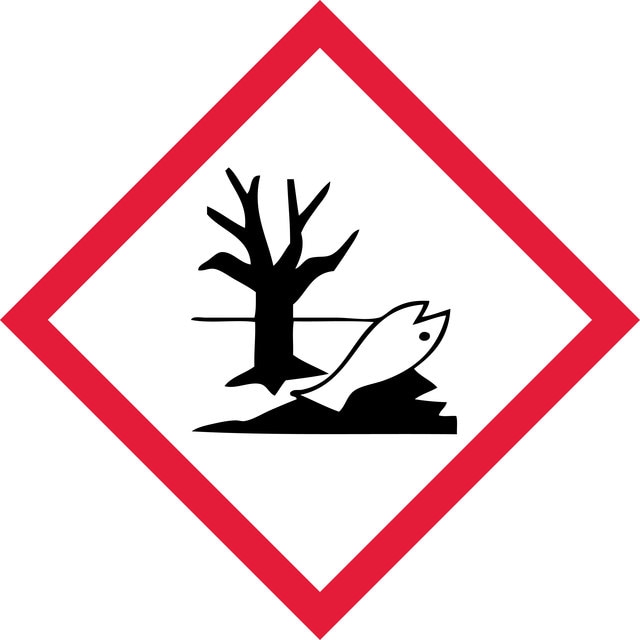
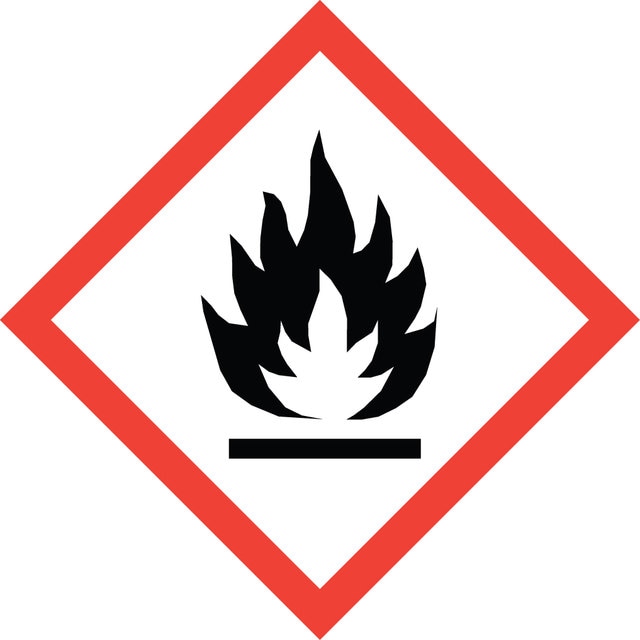
    Aquatic Acute 1 - Aquatic Chronic 1 - Asp. Tox. 1 - Flam. Liq. 3 - Skin Irrit. 2 - Skin Sens. 1

    Storage Class

    3 - Flammable liquids

    wgk

    WGK 2

    flash_point_f

    123.8 °F - closed cup

    flash_point_c

    51 °C - closed cup

    ppe

    Eyeshields, Faceshields, Gloves, type ABEK (EN14387) respirator filter

    Regulatory Information

    危险化学品

    This item has


    Choose from one of the most recent versions:

    Certificates of Analysis (COA)

    Lot/Batch Number

    Don't see the Right Version?

    If you require a particular version, you can look up a specific certificate by the Lot or Batch number.

    Already Own This Product?

    Find documentation for the products that you have recently purchased in the Document Library.

    Visit the Document Library


    Articles

    Explore evolving global laws on deforestation, labor, and supply chains, and how they impact compliance in the food, flavor, and fragrance industries.


    Bingyin Peng et al.
    Metabolic engineering, 47, 83-93 (2018-02-23)
    Monoterpene production in Saccharomyces cerevisae requires the introduction of heterologous monoterpene synthases (MTSs). The endogenous farnesyl pyrosphosphate synthase (FPPS; Erg20p) competes with MTSs for the precursor geranyl pyrophosphate (GPP), which limits the production of monoterpenes. ERG20 is an essential gene
    Marina Lehmann et al.
    Behavioral ecology and sociobiology, 65(2), 205-215 (2011-02-26)
    Circadian rhythmicity plays an important role for many aspects of honey bees' lives. However, the question whether it also affects learning and memory remained unanswered. To address this question, we studied the effect of circadian timing on olfactory learning and
    Johannes Niebler et al.
    Phytochemistry, 109, 66-75 (2014-12-04)
    Frankincense has been known, traded and used throughout the ages for its exceptional aroma properties, and is still commonly used in both secular and religious settings to convey a pleasant odor. Surprisingly, the odoriferous principle(s) underlying its unique odor profile


    Global Trade Item Number

    SKUGTIN
    W263303-20KG-K04061838180674
    W263303-SAMPLE-K04061838257185
    W263303-1KG-K04061838249043