
38370

DIC
≥98.0% (GC), for peptide synthesis
Synonym(s):
N,N′-Diisopropylcarbodiimide
Sign In to View Organizational & Contract Pricing.
Select a Size
Change View
About This Item
Linear Formula:
(CH3)2CHN=C=NCH(CH3)2
CAS Number:
Molecular Weight:
126.20
NACRES:
NA.22
PubChem Substance ID:
UNSPSC Code:
12352001
EC Number:
211-743-7
MDL number:
Beilstein/REAXYS Number:
878281
Product Name
DIC, purum, ≥98.0% (GC)
grade
purum
Quality Level
assay
≥98.0% (GC)
form
liquid
reaction suitability
reaction type: Coupling Reactions
refractive index
n20/D 1.433 (lit.)
bp
145-148 °C (lit.)
density
0.815 g/mL at 20 °C
application(s)
peptide synthesis
functional group
amine
SMILES string
CC(C)N=C=NC(C)C
InChI
1S/C7H14N2/c1-6(2)8-5-9-7(3)4/h6-7H,1-4H3
InChI key
BDNKZNFMNDZQMI-UHFFFAOYSA-N
Gene Information
human ... EPHX2(2053)
mouse ... Ephx2(13850)
General description
N,N′-Diisopropylcarbodiimide (DIC) is a carbodiimide used as a coupling reagent in the synthesis of amides, peptides, ureas, heterocycles, and unsymmetrical carbodiimides. It is also used in the polymerization reactions as an activator.
Application
N,N′-Diisopropylcarbodiimide can be used:
- To synthesize lanthanide (Ln) guanidinate complexes via insertion of carbodiimide into the Ln-N bond of lanthanocene secondary amido complexes.
- To facilitate the cyclization of N-(β-Hydroxy)amides to form 2-oxazolines.
- To synthesize 1-isopropyl-2-alkoxycarbonyl-3-isopropyliminio-aziridine by reacting with alkyl diazoacetates in the presence of transition metal salts.
DIC can be used as:
- A coupling reagent for the synthesis of various esters and amides by treating carboxylic acids with phenols and amines respectively.
- A reagent for the conversion of alcohols to aldehydes or ketones in the presence of DMSO via modified Moffatt-type oxidation reaction.
- A reagent to facilitates the preparation of alkyl halides from corresponding alcohols via the formation of o-alkylisourea.
Alternative to dicyclohexylcarbodiimide in peptide synthesis.
Still not finding the right product?
Explore all of our products under DIC



signalword
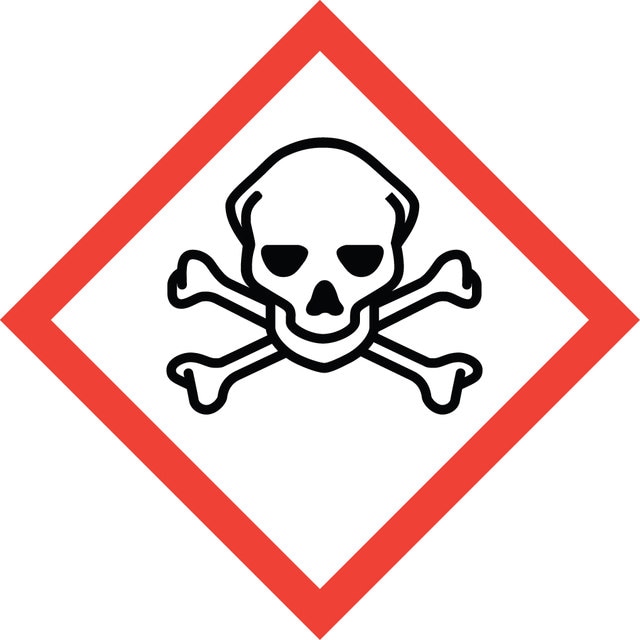
Danger
hcodes
Hazard Classifications
Acute Tox. 1 Inhalation - Eye Dam. 1 - Flam. Liq. 3 - Resp. Sens. 1 - Skin Sens. 1
Storage Class
3 - Flammable liquids
wgk
WGK 3
flash_point_f
91.4 °F
flash_point_c
33 °C
ppe
Eyeshields, Faceshields, Gloves, type ABEK (EN14387) respirator filter
Regulatory Information
危险化学品
非剧毒-急性毒性1
This item has
Choose from one of the most recent versions:
Already Own This Product?
Find documentation for the products that you have recently purchased in the Document Library.
Insertion of a carbodiimide into the Ln? N ?-bond of organolanthanide complexes. Isomerization and rearrangement of organolanthanides containing guanidinate ligands.
Zhang J
Organometallics, 23(13), 3303-3308 (2004)
1, 3-Diisopropylcarbodiimide
Nora GP, et al.
Encyclopedia of Reagents for Organic Synthesis, Second Edition (2001)
Stefano Crosignani et al.
Chemical communications (Cambridge, England), (2), 260-261 (2003-02-15)
Alcohols can be converted in high yields to the corresponding alkyl halides in a one-pot procedure via the corresponding O-alkylisourea; very short reaction times are possible when microwave irradiation is used.
Global Trade Item Number
| SKU | GTIN |
|---|---|
| 38370-25ML | 04061831964738 |
| 38370-100ML | 04061831964516 |
| 38370-500ML | 04061831964752 |