Sign In to View Organizational & Contract Pricing.
Select a Size
Change View
About This Item
Empirical Formula (Hill Notation):
C19H13ClIN5O2
CAS Number:
Molecular Weight:
505.70
UNSPSC Code:
12352102
NACRES:
NA.25
PubChem Substance ID:
EC Number:
205-676-2
Beilstein/REAXYS Number:
4093224
MDL number:
Assay:
≥97.0% (calc. on dry substance, NT)
product line
BioReagent
Quality Level
assay
≥97.0% (calc. on dry substance, NT)
mp
240 °C (dec.) (lit.), ~245 °C (dec.)
solubility
methanol: water (1:1): 50 mg/mL, very faintly turbid, very deep yellow (hot)
application(s)
histology
SMILES string
[Cl-].[O-][N+](=O)c1ccc(cc1)-[n+]2nc(nn2-c3ccc(I)cc3)-c4ccccc4
InChI
1S/C19H13IN5O2.ClH/c20-15-6-8-16(9-7-15)23-21-19(14-4-2-1-3-5-14)22-24(23)17-10-12-18(13-11-17)25(26)27;/h1-13H;1H/q+1;/p-1
InChI key
JORABGDXCIBAFL-UHFFFAOYSA-M
Application
Electron acceptor for the colorimetric assay of various dehydrogenases
Iodonitrotetrazolium (INT) is a tetrazolium dye precursor that forms a purple formazan dye on reduction and has been used in a variety of applications. It is considered to have higher reactivity than some tetrazolium compounds, at least with respect to succinate dehydrogenase, with optimal results obtained using a concentration of 0.8 mM INT. INT is used as an electron acceptor for the colorimetric assays of: lactate dehydrogenase, xanthine dehydrogenase, lactyl-CoA dehydrogenase, succinate dehydrogenase, BBM II ketolisomerase, histidinol dehydrogenase and diverse other hydrolases.
Still not finding the right product?
Explore all of our products under Iodonitrotetrazolium chloride
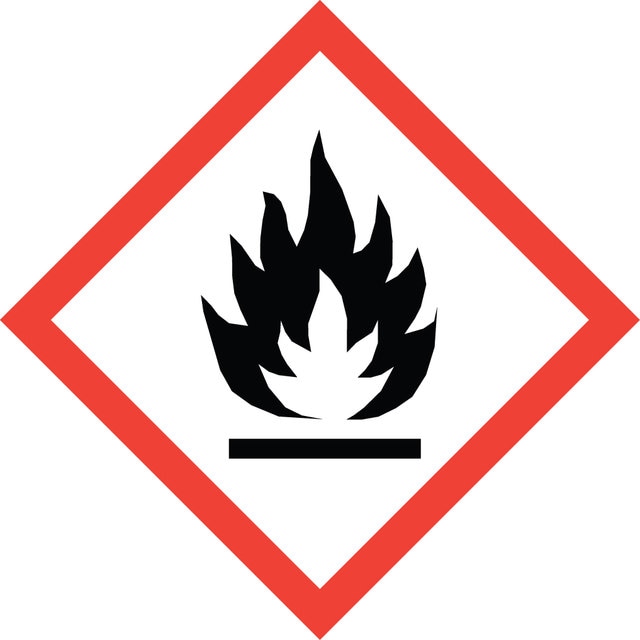
signalword
Danger
hcodes
Hazard Classifications
Flam. Sol. 1 - STOT SE 3
target_organs
Respiratory system
Storage Class
4.1B - Flammable solid hazardous materials
wgk
WGK 3
ppe
Eyeshields, Gloves, type N95 (US)
Choose from one of the most recent versions:
Already Own This Product?
Find documentation for the products that you have recently purchased in the Document Library.
Related Content
Christopher Auger et al.
Electrophoresis, 33(7), 1095-1101 (2012-04-28)
Phosphoenolpyruvate (PEP)-dependent kinases are central to numerous metabolic processes and mediate the production of adenosine triphosphate (ATP) by substrate-level phosphorylation (SLP). While pyruvate kinase (PK, EC: 2.7.1.40), the final enzyme of the glycolytic pathway is critical in the anaerobic synthesis
Antoine Picciocchi et al.
The Journal of biological chemistry, 286(32), 28357-28369 (2011-06-11)
Flavocytochrome b(558) (cytb) of phagocytes is a heterodimeric integral membrane protein composed of two subunits, p22(phox) and gp91(phox). The latter subunit, also known as Nox2, has a cytosolic C-terminal "dehydrogenase domain" containing FAD/NADPH-binding sites. The N-terminal half of Nox2 contains
Matthildi Valianou et al.
Scientific reports, 9(1), 3015-3015 (2019-03-01)
Tuberous Sclerosis Complex (TSC) and Lymphangioleiomyomatosis (LAM) are caused by inactivating mutations in TSC1 or TSC2, leading to mTORC1 hyperactivation. The mTORC1 inhibitors rapamycin and analogs (rapalogs) are approved for treating of TSC and LAM. Due to their cytostatic and
Global Trade Item Number
| SKU | GTIN |
|---|---|
| 681636-1MG | 04055977260168 |
| SML0717-25MG | 04061833223680 |
| SML0717-5MG | 04061833223697 |
| 58030-5G-F | 04061833356449 |
| 58030-1G-F | 04061832630113 |
| 58030-25G-F | 04061832630120 |