Skip to Content
Merck
CN

D8638

Dodecyltrimethylammonium bromide

≥98%

Synonym(s):

Lauryltrimethylammonium bromide

Sign In to View Organizational & Contract Pricing.

Select a Size

Change View

About This Item

Linear Formula:
CH3(CH2)11N(CH3)3Br
CAS Number:
Molecular Weight:
308.34
UNSPSC Code:
12161900
NACRES:
NA.25
PubChem Substance ID:
EC Number:
214-290-3
Beilstein/REAXYS Number:
3597463
MDL number:
Technical Service
Need help? Our team of experienced scientists is here for you.
Let Us Assist


biological source

synthetic (oragnic)

description

cationic

assay

≥98%

form

powder

mol wt

308.34 g/mol

mp

246 °C (dec.) (lit.)

solubility

954 g/L at 20 °C

density

1.17 g/cm3 at 20 °C (68 °F)

application(s)

(Solubilizing proteins, cell lysis)

SMILES string

[Br-].CCCCCCCCCCCC[N+](C)(C)C

InChI

1S/C15H34N.BrH/c1-5-6-7-8-9-10-11-12-13-14-15-16(2,3)4;/h5-15H2,1-4H3;1H/q+1;/p-1

InChI key

XJWSAJYUBXQQDR-UHFFFAOYSA-M

General description

Dodecyltrimethylammonium bromide (DTAB) is a versatile quaternary ammonium surfactant with a wide range of applications in cell biology and biochemical research. Its unique properties make it a valuable tool for solubilizing proteins and peptides, extracting DNA, and lysing cells. In proteomics research, DTAB plays a crucial role in protein solubilization and purification. Its ability to disrupt hydrophobic interactions and electrostatic forces allows it to effectively solubilize membrane-bound proteins and peptides, making them accessible for analysis and characterization. This property is particularly important in proteomics studies involving membrane proteins, which are often difficult to solubilize using conventional methods.

Beyond protein solubilization, this cationic detergent also finds application in DNA extraction procedures. Its ability to interact with DNA and alter its conformation facilitates the release of DNA from cellular components, enabling its subsequent purification and analysis. This property is particularly useful in the isolation of DNA from various biological samples, including tissues, cells, and microorganisms. Furthermore, DTAB demonstrates effectiveness in cell lysis processes. Its ability to disrupt cell membranes and release intracellular components makes it a valuable tool for breaking down cells and accessing their contents. This property has applications in various biological studies, including protein extraction, enzyme assays, and cellular component analysis.

Dodecyltrimethylammonium bromide (DTAB) stands as a versatile and widely applicable surfactant with a diverse range of applications in proteomics research, cell biology, and biochemical research. Its ability to solubilize proteins and peptides, extract DNA, and lyse cells makes it an essential tool for various biological studies and analytical techniques.

Application

Dodecyltrimethylammonium bromide has been used in a study to assess the distribution of binary mixed counterions in surfactant adsorbed films. It has also been used in a study to investigate chain length compatibility of surfactants for extraction of organophosphorous pesticides.
Dodecyltrimethylammonium bromide has been used to lyse neonatal normal human epidermal keratinocyte (NHEK) cells for the quantification of intracellular nicotinamide adenine dinucleotide phosphate (NADP+) and NADPH (reduced form) content.

Features and Benefits

High-quality compound for your cell biology and biochemical research

Other Notes

For additional information on our range of Biochemicals, please complete this form.


Still not finding the right product?

Explore all of our products under Dodecyltrimethylammonium bromide
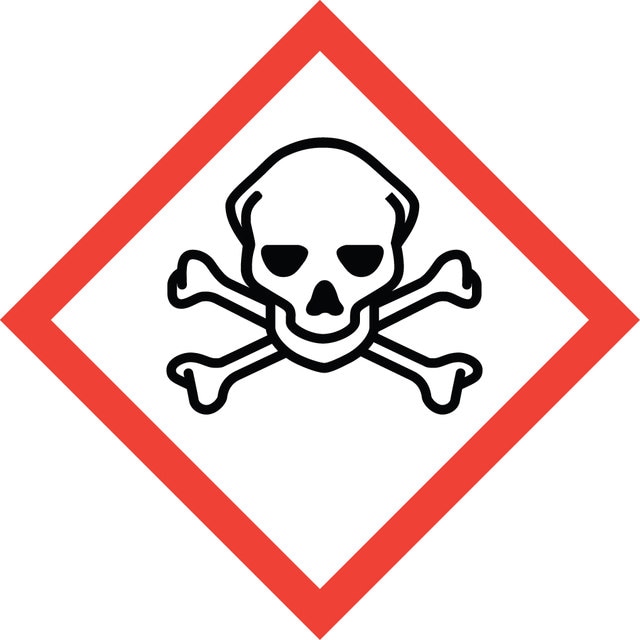

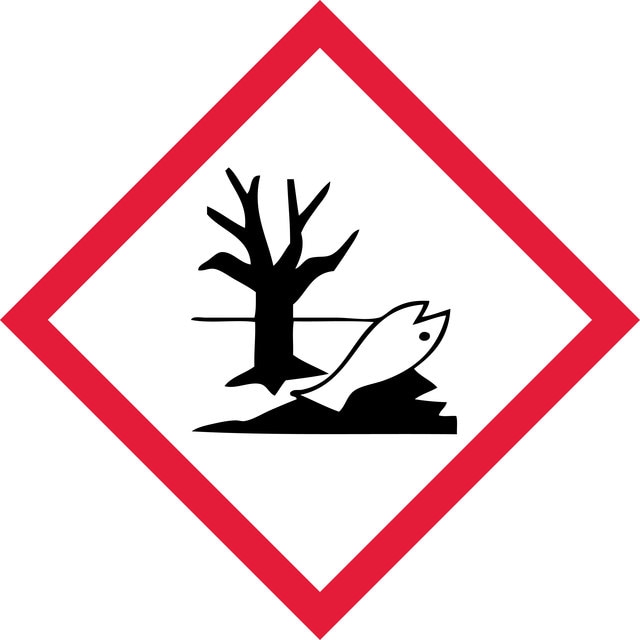
pictograms

Skull and crossbonesEnvironment

signalword

Danger

Hazard Classifications

Acute Tox. 3 Oral - Aquatic Acute 1 - Aquatic Chronic 1 - Eye Irrit. 2 - Skin Irrit. 2

Storage Class

6.1C - Combustible acute toxic Cat.3 / toxic compounds or compounds which causing chronic effects

wgk

WGK 3

flash_point_f

Not applicable

flash_point_c

Not applicable

ppe

dust mask type N95 (US), Eyeshields, Gloves


Choose from one of the most recent versions:

Certificates of Analysis (COA)

Lot/Batch Number

Don't see the Right Version?

If you require a particular version, you can look up a specific certificate by the Lot or Batch number.

Already Own This Product?

Find documentation for the products that you have recently purchased in the Document Library.

Visit the Document Library


Study on the distribution of binary mixed counterions in surfactant adsorbed films by total reflection XAFS measurements
Y Imai et al.
Journal of Colloid and Interface Science, 15, 219-224 (2012)
Xiaofeng Chang et al.
Journal of colloid and interface science, 377(1), 291-298 (2012-04-28)
This study reported, for the first time systematically, photodegradation of Rhodamine B (RhB) in aqueous solution over BiOCl and BiOBr semiconductors. Under visible light irradiation (λ>400 nm, λ>420 nm and λ=550±15 nm), RhB adsorbed on the surface of BiOCl and
Jonas Carlstedt et al.
Physical chemistry chemical physics : PCCP, 14(27), 9574-9577 (2012-06-14)
Polyelectrolytes with amphiphilic counterions, PEACs, are water insoluble because the amphiphiles self-assemble into highly charged micelles that strongly associate with the equally highly charged polyions. However, in the presence of water soluble cyclodextrins (CDs) that form inclusion complexes with the


Global Trade Item Number

SKUGTIN
D8638-100G04061835544202
D8638-25G04061835544219