
Sign In to View Organizational & Contract Pricing.
Select a Size
Change View
About This Item
Empirical Formula (Hill Notation):
C11H16ClN5·HCl
CAS Number:
Molecular Weight:
290.19
NACRES:
NA.77
PubChem Substance ID:
UNSPSC Code:
51101906
EC Number:
211-283-7
MDL number:
Quality Level
assay
≥95% (HPLC)
form
solid
storage condition
desiccated
solubility
acetonitrile: water: ~1 mg/mL (60/40)
originator
AstraZeneca
storage temp.
2-8°C
SMILES string
Cl.CC(C)NC(=N)NC(=N)Nc1ccc(Cl)cc1
InChI
1S/C11H16ClN5.ClH/c1-7(2)15-10(13)17-11(14)16-9-5-3-8(12)4-6-9;/h3-7H,1-2H3,(H5,13,14,15,16,17);1H
InChI key
SARMGXPVOFNNNG-UHFFFAOYSA-N
Application
Proguanil (chlorguanide) may be used in anti-parasitic protozoan drug development to study its pharmacokinetics, metabolism, safety, efficacy and methods of delivery as an antimalarial drug.
Biochem/physiol Actions
Chlorguanide (proguanil) is combined with atovaquone for malaria prophylaxis. The two compounds act synergistically to inhibit the plasmodial dihydrofolate reductase (DHFR) and interrupt the electron transport chain. Mutations in DHFR account for the development of resistant strains.
Proguanil hydrochloride is antimalarial. Dihydrofolate reductase inhibitor
Features and Benefits
This compound was developed by AstraZeneca. To browse the list of other pharma-developed compounds and Approved Drugs/Drug Candidates, click here.
Still not finding the right product?
Explore all of our products under Proguanil hydrochloride
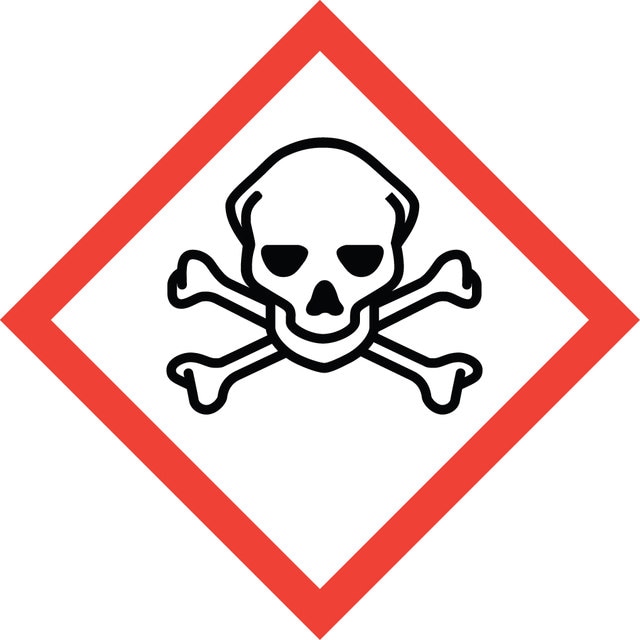
signalword
Danger
hcodes
Hazard Classifications
Acute Tox. 3 Oral
Storage Class
6.1C - Combustible acute toxic Cat.3 / toxic compounds or compounds which causing chronic effects
wgk
WGK 3
flash_point_f
Not applicable
flash_point_c
Not applicable
Choose from one of the most recent versions:
Already Own This Product?
Find documentation for the products that you have recently purchased in the Document Library.
Articles
Bioactive small molecules for immune system signaling target identification/validation and antibiotics, antivirals, and antifungals offered.
Laura C Steinhardt et al.
The American journal of tropical medicine and hygiene, 85(6), 1015-1024 (2011-12-07)
Because of recent declining malaria transmission in Latin America, some authorities have recommended against chemoprophylaxis for most travelers to this region. However, the predominant parasite species in Latin America, Plasmodium vivax, can form hypnozoites sequestered in the liver, causing malaria
M Cella et al.
Clinical pharmacology and therapeutics, 91(4), 718-725 (2012-03-09)
In this investigation we evaluate the relevance of a model-based approach for pharmacokinetic (PK) bridging and dose selection of drug combinations in children. The fixed-dose combination of atovaquone (ATV) and proguanil (PGN) was used for illustration purposes. A population PK
John E Gimnig et al.
The American journal of tropical medicine and hygiene, 88(2), 301-308 (2012-12-20)
The human landing catch (HLC) has long been the gold standard for estimating malaria transmission by mosquitoes, but has come under scrutiny because of ethical concerns of exposing collectors to infectious bites. We estimated the incidence of Plasmodium falciparum malaria
Global Trade Item Number
| SKU | GTIN |
|---|---|
| G7048-50MG | 04061833642351 |
| G7048-10MG | 04061833024195 |
