
T0642

Tubercidin
from Streptomyces tubercidicus, ~95%
Synonym(s):
7-Deazaadenosine
Sign In to View Organizational & Contract Pricing.
Select a Size
Change View
About This Item
Empirical Formula (Hill Notation):
C11H14N4O4
CAS Number:
Molecular Weight:
266.25
UNSPSC Code:
51102829
NACRES:
NA.85
PubChem Substance ID:
EC Number:
200-703-4
Beilstein/REAXYS Number:
38498
MDL number:
biological source
Streptomyces tubercidicus
Quality Level
assay
~95%
form
powder
color
off-white
antibiotic activity spectrum
fungi, parasites, viruses
mode of action
DNA synthesis | interferes
SMILES string
O[C@H]1[C@@H](O)[C@H](N2C=CC3=C2N=CN=C3N)O[C@@H]1CO
InChI
1S/C11H14N4O4/c12-9-5-1-2-15(10(5)14-4-13-9)11-8(18)7(17)6(3-16)19-11/h1-2,4,6-8,11,16-18H,3H2,(H2,12,13,14)/t6-,7-,8-,11-/m1/s1
InChI key
HDZZVAMISRMYHH-KCGFPETGSA-N
Gene Information
rat ... Adora1(29290)
General description
Chemical structure: nucleoside
Application
It is used to study tubercidin′s mechanism of toxicity, tubercidin resistance and is used as a selection agent. Tubercidin is used to study RNAi silencing. It is used to study the role of transmethylation in chemotaxis of eukaryotic cells.
Biochem/physiol Actions
Toxic adenosine analog with antiviral, antitrypanosomal, and antifungal functions. Mode of action: Inhibits multiple metabolic processes, including RNA processing, nucleic acid synthesis, protein synthesis, and methylation of tRNA through intracellular incorporation into nucleic acids. Tubercidin acts as a plant antifungal, inhibits mammalian SAH hydrolase (SAHH), and blocks purine biosynthesis in Candida famata.
Tubercidin is a toxic adenosine analog with antiviral, antitrypanosomal, and antifungal functions. It inhibits multiple metabolic processes, including RNA processing, nucleic acid synthesis, protein synthesis, and methylation of tRNA through intracellular incorporation into nucleic acids. Tubercidin acts as a plant antifungal, inhibits mammalian SAH hydrolase (SAHH), and blocks purine biosynthesis in Candida famata. Tubercidin inhibits glycolysis in Trypanosoma brucei. Tubercidin inhibits both chemotaxis and chemotaxis-dependent cell streaming of Dictyostelium, and chemotaxis of neutrophils at concentrations that have little effect on cell viability.
Other Notes
Keep container tightly closed in a dry and well-ventilated place.
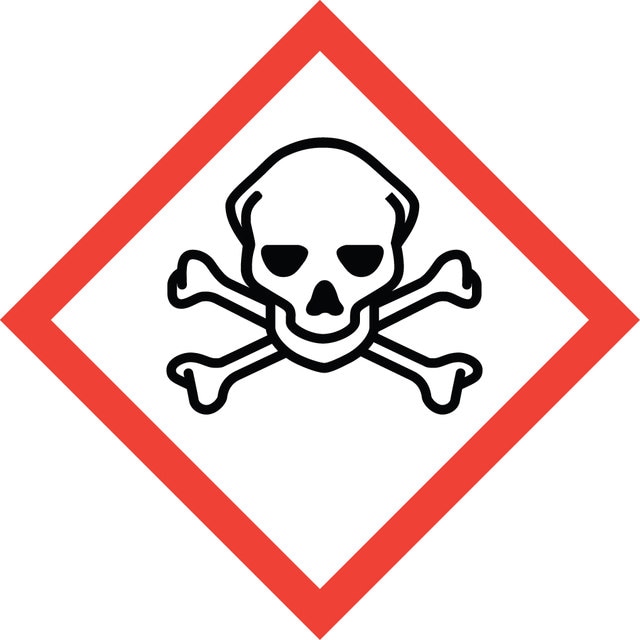
signalword
Danger
hcodes
pcodes
Hazard Classifications
Acute Tox. 2 Oral
Storage Class
6.1A - Combustible acute toxic Cat. 1 and 2 / very toxic hazardous materials
wgk
WGK 3
flash_point_f
Not applicable
flash_point_c
Not applicable
ppe
Eyeshields, Faceshields, Gloves, type P2 (EN 143) respirator cartridges
Regulatory Information
新产品
This item has
Choose from one of the most recent versions:
Already Own This Product?
Find documentation for the products that you have recently purchased in the Document Library.
Aurelie Bourderioux et al.
Journal of medicinal chemistry, 54(15), 5498-5507 (2011-06-30)
A series of 7-aryl- and 7-hetaryl-7-deazaadenosines was prepared by the cross-coupling reactions of unprotected or protected 7-iodo-7-deazaadenosines with (het)arylboronic acids, stannanes, or zinc halides. Nucleosides bearing 5-membered heterocycles at the position 7 exerted potent in vitro antiproliferative effects against a
Li-Xing Zhao et al.
Journal of natural products, 74(9), 1990-1995 (2011-08-30)
Our current natural product program utilizes new actinomycetes originating from unexplored and underexplored ecological niches, employing cytotoxicity against a selected panel of cancer cell lines as the preliminary screen to identify hit strains for natural product dereplication, followed by mechanism-based
Mark E Drew et al.
The Journal of biological chemistry, 278(47), 46596-46600 (2003-09-16)
We used an RNA interference (RNAi) library in a forward genetic selection to study the mechanism of toxicity of tubercidin (7-deazaadenosine) to procyclic Trypanosoma brucei. Following transfection of cells with an RNAi-based genomic library, we used 5 microm tubercidin to
Global Trade Item Number
| SKU | GTIN |
|---|---|
| T0642-250MG | 04061832992433 |
| T0642-10MG | 04061832992426 |
| T0642-50MG | 04061832992440 |