
270725

丙酮
suitable for HPLC, ≥99.9%
登录 查看组织和合同定价。
选择尺寸
变更视图
关于此项目
线性分子式:
CH3COCH3
化学文摘社编号:
分子量:
58.08
NACRES:
NA.21
PubChem Substance ID:
eCl@ss:
39021201
UNSPSC Code:
12190000
EC Number:
200-662-2
MDL number:
Beilstein/REAXYS Number:
635680
Assay:
≥99.9%
Grade:
HPLC grade
Technique(s):
HPLC: suitable
Bp:
56 °C/760 mmHg (lit.)
Vapor pressure:
184 mmHg ( 20 °C)
grade
HPLC grade
Quality Level
vapor density
2 (vs air)
vapor pressure
184 mmHg ( 20 °C)
assay
≥99.9%
form
liquid
purified by
glass distillation
expl. lim.
13.2 %
technique(s)
HPLC: suitable
impurities
≤0.5% water
evapn. residue
≤0.0002%
refractive index
n20/D 1.359 (lit.)
pH
5-6 (20 °C, 395 g/L)
bp
56 °C/760 mmHg (lit.)
mp
−94 °C (lit.)
density
0.791 g/mL at 25 °C (lit.)
UV absorption
λ: 330 nm Amax: 1.00, λ: 340 nm Amax: 0.10, λ: 350 nm Amax: 0.02, λ: 400 nm Amax: 0.01
application(s)
PFAS testing
food and beverages
format
neat
storage temp.
room temp
SMILES string
CC(C)=O
InChI
1S/C3H6O/c1-3(2)4/h1-2H3
InChI key
CSCPPACGZOOCGX-UHFFFAOYSA-N
Application
丙酮的发光强度取决于溶液组分。丙酮吸收UV光,导致丙酮光分解和放射性产物。
Packaging
100ML,1L,2L,4L,6×1L,4×2L,4×4L玻璃瓶包装。
以下用回收容器包装运输。*
需要寄存。
18L, 56L, 200LPure-Pac® 1
20L, 50L, 200LP23A-LS Pure-Pac® 2
以下用回收容器包装运输。*
需要寄存。
18L, 56L, 200LPure-Pac® 1
20L, 50L, 200LP23A-LS Pure-Pac® 2
溶剂用M瓶(M-Bottle for Solvents)
作为实验室试剂的全球领导者,我们始终如一地不断探索提高产品安全性的新方法。新开发4L溶剂瓶采用先进的密封技术消除漏液,让溶剂处理变得更加安全和便利。
了解所有最新设计!
作为实验室试剂的全球领导者,我们始终如一地不断探索提高产品安全性的新方法。新开发4L溶剂瓶采用先进的密封技术消除漏液,让溶剂处理变得更加安全和便利。
了解所有最新设计!
Other Notes
Pure-Pac®II容器需要Micromatic MacroValve偶联器用于溶剂的配送,Z560723。
Legal Information
Pure-Pac is a registered trademark of Merck KGaA, Darmstadt, Germany
Still not finding the right product?
Explore all of our products under 丙酮
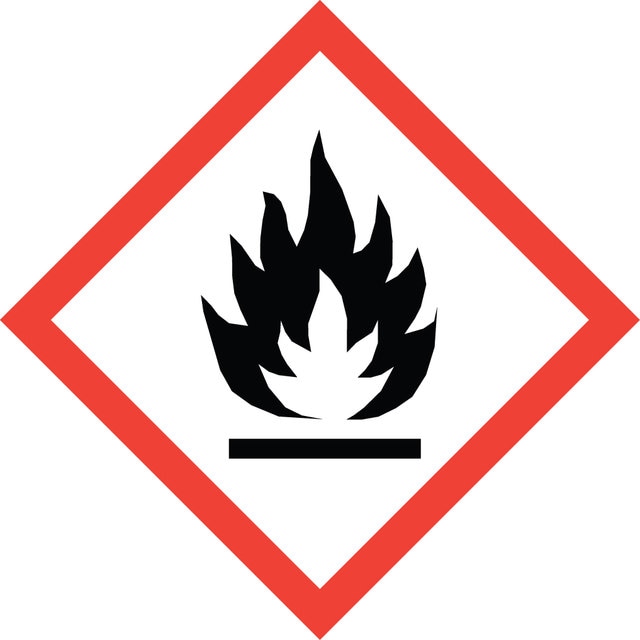

signalword
Danger
hcodes
Hazard Classifications
Eye Irrit. 2 - Flam. Liq. 2 - STOT SE 3
target_organs
Central nervous system
supp_hazards
存储类别
3 - Flammable liquids
wgk
WGK 1
flash_point_f
1.4 °F - closed cup
flash_point_c
-17.0 °C - closed cup
法规信息
危险化学品
易制毒化学品(3类)
此项目有
商品
A shortened review of fundamentals of Porous Graphitic Carbon (PGC) materials. What they are and how do they work as a stationary phase material in HPLC?.