
48567

蒽
analytical standard
别名:
蒽, 蒽醌
登录 查看组织和合同定价。
选择尺寸
变更视图
关于此项目
经验公式(希尔记法):
C14H10
化学文摘社编号:
分子量:
178.23
EC Number:
204-371-1
PubChem Substance ID:
UNSPSC Code:
12352200
Beilstein/REAXYS Number:
1905429
Colour Index Number:
10790
MDL number:
NACRES:
NA.24
grade
analytical standard
Quality Level
vapor density
6.15 (vs air)
vapor pressure
1 mmHg ( 145 °C)
CofA
current certificate can be downloaded
autoignition temp.
1004 °F
packaging
ampule of 5000 mg
technique(s)
HPLC: suitable, gas chromatography (GC): suitable
bp
340 °C (lit.)
mp
210-215 °C (lit.)
solubility
alcohols: soluble, benzene: soluble, chloroform: soluble, hydronaphthalenes: soluble, supercritical carbon dioxide: soluble
application(s)
environmental
format
neat
storage temp.
2-30°C
SMILES string
c1ccc2cc3ccccc3cc2c1
InChI
1S/C14H10/c1-2-6-12-10-14-8-4-3-7-13(14)9-11(12)5-1/h1-10H
InChI key
MWPLVEDNUUSJAV-UHFFFAOYSA-N
Gene Information
human ... CYP1A2(1544)
General description
Anthracene is a polycyclic aromatic hydrocarbon often formed by incomplete combustion of organic materials.
This compound is listed in the SVHC (Substances of very high concern) candidate list of ECHA (European Chemicals Agency)
Application
Anthracene may be used as an analytical reference standard for the determination of the analyte in aqueous solution by synchronous fluorimetry.
蒽已被证明可溶于各种环己酮、乙酸乙酯和甲醇的二元和三元混合物中。
Refer to the product′s Certificate of Analysis for more information on a suitable instrument technique. Contact Technical Service for further support.
Still not finding the right product?
Explore all of our products under 蒽
存储类别
11 - Combustible Solids
wgk
WGK 2
flash_point_f
249.8 °F - closed cup
flash_point_c
121.0 °C - closed cup
ppe
dust mask type N95 (US), Eyeshields, Gloves
signalword
Danger
hcodes
Hazard Classifications
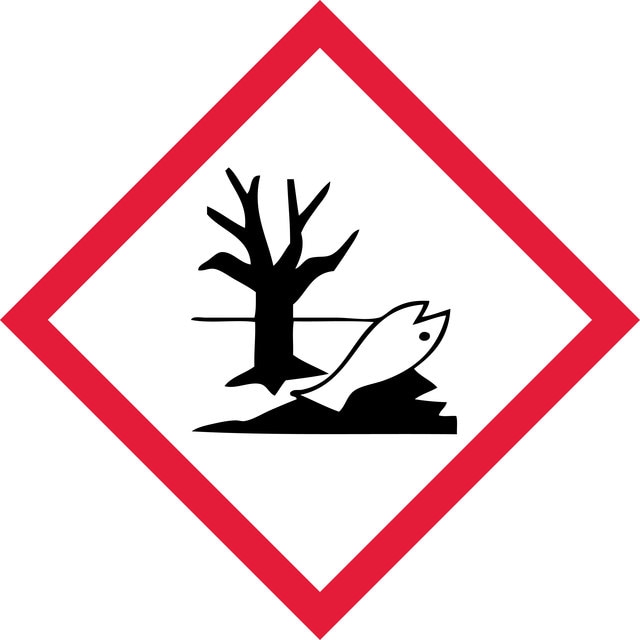
Aquatic Acute 1 - Aquatic Chronic 1 - PBT
法规信息
危险化学品
此项目有
Simultaneous determination of dissolved anthracene and pyrene in aqueous solution by synchronous fluorimetry.
Cai ZQ, et al.
Spectrochimica Acta. Part A, Molecular and Biomolecular Spectroscopy, 69(1), 130-133 (2008)
Determination of polycyclic aromatic hydrocarbons in water samples using high-performance liquid chromatography with amperometric detection.
Nirmaier HP, et al.
Journal of Chromatography A, 730(1-2), 169-175 (1996)
Hyunjung Lee et al.
Inorganic chemistry, 51(20), 10904-10915 (2012-09-26)
The tendency of a Hg(II) ion to strongly quench fluorescence of potential fluorescent sensors is explored. Fluorescence measurements show the expected order of the chelation-enhanced fluorescence (CHEF) effect of Zn(II) > Cd(II) > Hg(II) ~ Cu(II), which is interpreted as
全球贸易项目编号
| 货号 | GTIN |
|---|---|
| 48567 | 04061834184126 |